
By Katarina Thor
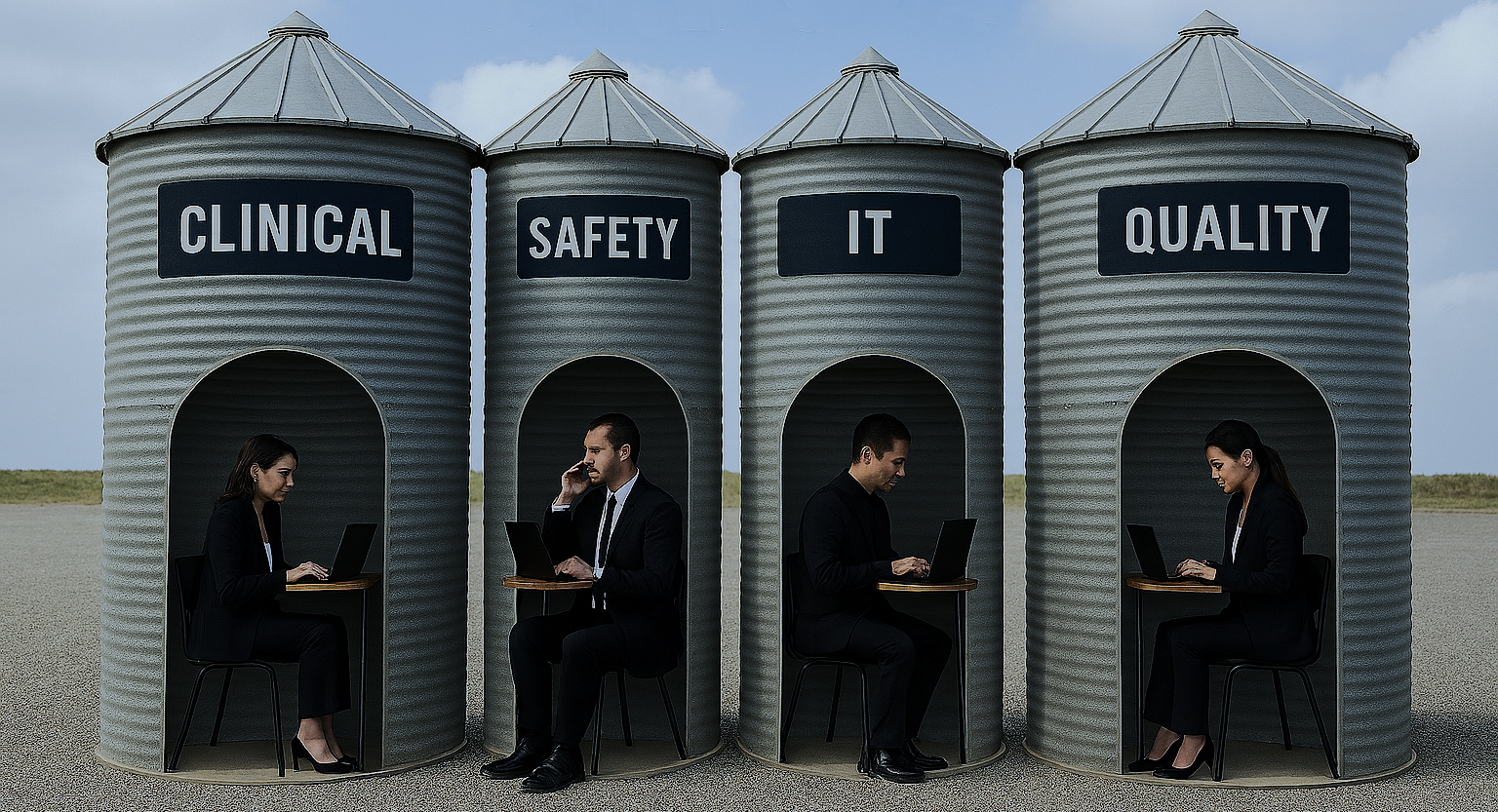
So, what are Silos?
Silos results when teams, departments, and leaders operate in isolation.
Most compliance problems start with organizations that do not think of processes “End to End”. People think in departments and not as one company. This can include everyone from CEO, Management, Safety, Legal, Clinical operation, IT, Quality, and so forth.
- “This is my area; the cardiovascular team conducted this trial.”
- “It is our SOP, as my team wrote it, and we now control it.”
- “I´m the owner of this deviation, I will fix it for my trial.”
You see it everywhere; it doesn’t matter if it is big pharma or a small biotech company.
Silos create “local control” and global instability.
But why is it so?
One of the reasons is of course that nobody owns or has the oversight of the whole chain, because different parts of the process happen in different departments or with different service providers.
The number of SOPs is also increasing, and the more documents, less clarity. Neither are they fit for purpose, nor does anyone have an overview of what processes ‘others’ are working with. This will become a major risk with handover from one department to another if this is not clearly described and documented.
It is also not uncommon that deviation investigations stop at the department line. Instead of thinking end-to-end process and cross all trials.
We see, for example, CAPAs that fix symptoms but not the systems cross functional.
Companies that think #Quality don’t optimize departments; they optimize processes and think about end-to-end workflows when they are developed.
They investigate deviations like system failures, not department failures, nor blame it on human errors. This is because the real risk is not that people don’t care; the risk is that everyone cares, but only about their own piece.
At the end, patients don’t experience departments; they experience the full process from end to end.
Working cross-functional increases the likelihood of quicker and successful execution. It also increases the chance of passing an inspection from a Health Authority without any major findings.
This is also why I highly recommend planning for #MockInspections before filing.
Not only from a strategic point of view, but also because it helps everyone internally to understand everyone’s contribution in the trial.
As a former GCP inspector I just loved when people started during the inspection to discuss who did what in the study, or even better: ”I though data management looked at this” but they were not even mentioned in the SOP. Another example was a company that submitted a clinical study report (CSR) to the Heath Authority where the lab results from 2 different labs were merged. The only issue was that data was in different units from the beginning, and no one verified the quality of the data.
If you’d like to continue the discussion, I’m always happy to talk — and I’ll also be sharing more on why mock inspections are so important in an upcoming LinkedIn post.
So follow us for more.