
By Katarina Thor
As an inspector you see all kinds of contracts, some done by a legal firm, some done by a trial team, and some not done at all……
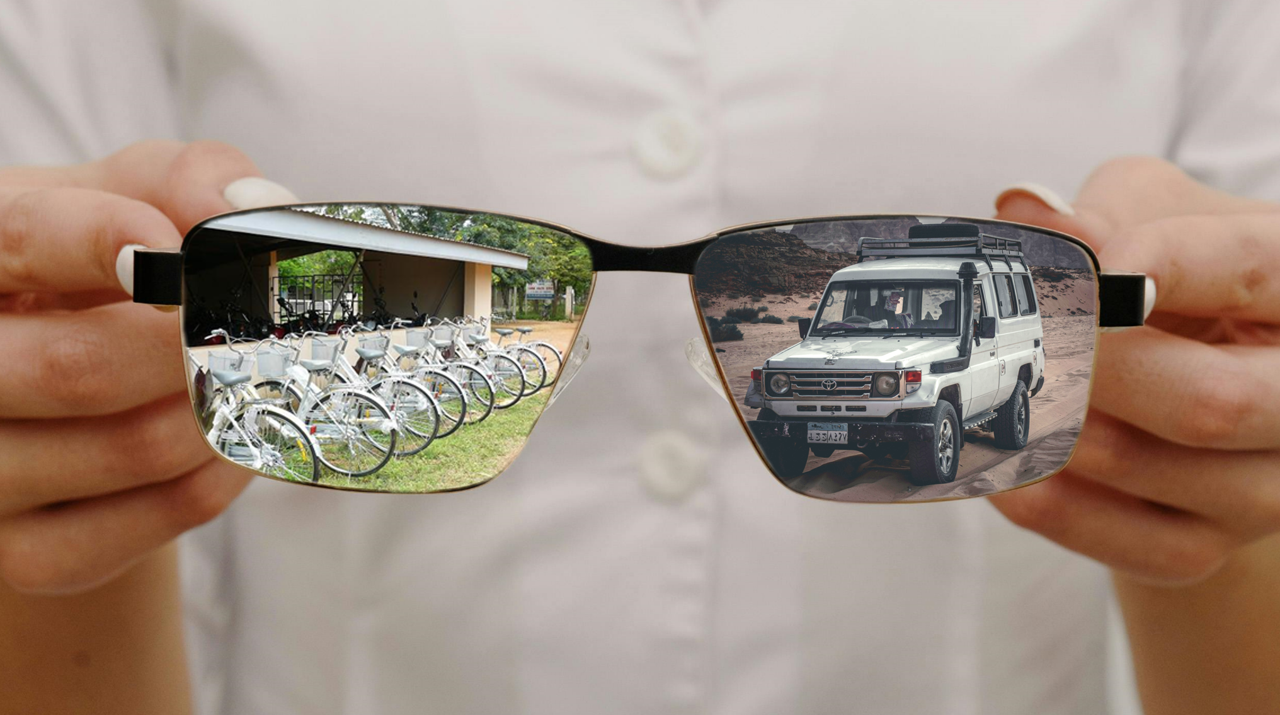
The contract with 15 bicycles and two 4WDs
When a global sponsor initiated a clinical trial in a rural region of west Africa, it quickly became clear that a standard contract template would not address the realities on the ground.
The site, a district hospital supported by a network of small communities, served a population spread across long distances, with extremely limited transportation options.
During the inspection, we learned that many children were unable to participate because their parents could not afford to leave their daily work, especially subsistence farming and market selling. Even a half‑day trip to the clinic meant a loss of income, and for some families, that lost income meant no food for the evening. Additionally, the road infrastructure was poor, with narrow dirt tracks, frequent flooding, and areas that became completely inaccessible during the rainy season.
To address these barriers, the sponsor and the investigator jointly designed a contract tailored to the setting. The contract included 15 locally sourced bicycles assigned to the study nurses.
Their purpose was twofold:
- Home visits: to reach children in remote villages for follow-up checks, symptom screening, and data collection.
- For many families, being visited at home rather than losing hours walking to the clinic was the difference between participating and withdrawing.
Due to the difficult terrain and the unpredictable weather, the contract also included two four‑wheel‑drive vehicles dedicated to emergency use, both for transporting participants with urgent symptoms to the district hospital but also to ensuring safe travel for staff during critical follow-up or safety assessments. This also maintained continuity of trial visits even when roads became flooded or impassable.
The Investigator had previously experienced delays of up to five hours trying to transport acutely ill patients on motorcycle taxis or makeshift carts. The sponsor therefore deemed the 4WDs a necessary safety measure for trial integrity and participant wellbeing.
The tailored provisions were built directly into the clinical trial contract, outlining ownership, maintenance responsibilities, safety procedures, and designated use. The inclusion of bicycles and 4WD vehicles ensured:
- Ethical access for participants who otherwise could not afford the time or cost of travel
- Safety protections in a setting with high medical transport risks
- Reliable follow-up, reducing missed visits and protocol deviations
- Compliance with ICH GCP and ethics, by ensuring that trial logistics supported both data quality and participant welfare
What began as an unconventional request. 15 bicycles and two 4WDs in a clinical trial contract became a thoughtful example of culturally and operationally sensitive trial design, grounded in respect for participants and the realities of their daily lives.
No contract, but the ophthalmologist got paid for all his patients
During a multi‑center diabetes clinical trial, one Investigator engaged a neighboring ophthalmologist to perform trial related eye assessments for enrolled patients. Although they verbally discussed expectations, timelines, and compensation, no written agreement or contract was ever established‑.
Despite the lack of documentation, the ophthalmologist proceeded to conduct visual acuity testing and ocular examinations for several participants, following routine clinical practice rather than the study protocol. After completing the assessments, he submitted his findings to the Investigator and informed the sponsor of the number of examinations conducted. However, his invoice also included examinations performed on his regular, non-trial‑ patients.
During the inspection, the inspectors reviewed site documentation and identified major issues:
- No written agreement existed between the Investigator and the ophthalmologist
- The ophthalmic assessments were conducted according to routine clinical practice rather than per protocol
- Sponsor payments were issued directly to the ophthalmologist despite the absence of a contract, and the invoices included examinations for both trial participants and regular patients.
When questioned, the Investigator acknowledged that he had assumed the sponsor had a direct contract with the ophthalmologist, as payments were being made. However, no documentation existed defining the scope of work, training, delegation of responsibilities, compensation terms, or requirements for protocol and GCP compliance. The incident ultimately served as an important learning point for the sponsor: all individuals or service providers performing trial-related tasks must have clear, documented agreements in place before undertaking any study procedures, in line with ICH GCP requirements. The resulting data could not be used for the clinical trial.