

By Katarina Thor
The archive that went missing
One week before the inspection was scheduled to begin, we received a call from a very distressed Principal Investigator (PI)—almost in tears—because he could not locate the essential trial documents. He suggested cancelling the inspection altogether, saying that both he and the sponsor were prepared to accept the consequences, even though he had previously expressed how much he was looking forward to our visit.
As an inspector, receiving such a call immediately raises red flags. Something was clearly wrong, and we needed to understand what had happened.
The PI explained that the site had used an external archive service. Everything appeared to be in order: a contract was in place, a storage number had been assigned, and a contact person had been identified. However, when it came time to send the document boxes, the site had arranged for the pick‑up company to collect them from the loading dock—and then simply left the boxes on the dock for pickup. That decision turned out to be a critical mistake. At some point, someone else must have picked up the boxes.
Even if most of the documents were gone, we decided to make an attempt to reconstruct the trial documentation, even though this would inevitably lead to issuing a critical finding to the site.
Our biggest question became: Where could we possibly retrieve the missing documents?
To tackle the situation, we agreed on the following actions:
- The PI would contact all trial participants to ask whether anyone still had a copy of their signed informed consent form.
- The PI would reach out to the Ethics Committee to obtain all documents they had received, including submissions and approvals.
- The PI would contact the Biobank to request all documentation previously provided to them.
- The sponsor would perform an exhaustive search of the Trial Master File (TMF) and reach out to the laboratory and various system vendors to recover any remaining documentation that could help reconstruct the Investigator Site Master File.
- We would review all internal records to determine what supporting materials we had available for the trial.
Did we succeed?
Nine out of the eleven participants returned to the clinic with copies of their informed consent forms. The remaining two provided personal letters to the PI confirming their participation. All medical records were stored in the electronic system, so there were no issues with source data.
The Ethics Committee, the Biobank, and the Health Authority provided the documents they had on file. The sponsor compiled everything recoverable from the TMF. Inevitably, some documents remained missing—such as the patient identification list and the original essential documents that should have been archived at the site.
The most significant challenge, however, involved laboratory data and information stored in a decommissioned vendor system. These records had not been archived properly and were missing the required audit trail and metadata.
In the end, the sponsor had to exclude the affected data from the analysis. Still, the entire process turned out to be an invaluable—and unforgettable—learning experience for everyone involved.
Fire in the archive
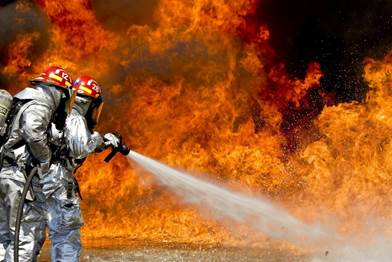
Another unforgettable inspection began with an unexpected phone call from the Phase I unit we were scheduled to visit. The staff informed us—somewhat dramatically—that a fire had broken out in their archive during the night, and therefore we shouldn’t come.
Naturally, our suspicions were raised. Of all the cabinets in the archive, the only one damaged by the fire was the one containing the documents for the very study we intended to inspect. The timing and specificity were… remarkable.
Since our flights were already booked, we decided to proceed with the visit. At the very least, we could review their Quality Management System and examine how they handled archiving.
Two days later, upon arrival, we found that the archive had already been freshly repainted—a surprisingly fast recovery. When we asked for documentation from the fire department, the staff calmly explained that the fire had been “very small,” limited to just that single cabinet, and that they had extinguished it themselves. As a result, there was no official incident report from the fire department.
Unfortunately, with no remaining data or essential documents, the study was unusable.
The archive that flooded
This inspection turned out to be unexpectedly dramatic. As soon as we arrived on site, the Principal Investigator informed us that the basement archive had been flooded a few months earlier after a severe storm. They had spent weeks trying to dry and salvage the documents, but the damage was overwhelming.
The files were completely saturated, covered in mold, and many had fused together into solid, unreadable blocks of paper. Despite their efforts, the essential documents were beyond recovery.
With no usable study documentation remaining, we had no choice but to end the inspection almost immediately and leave the site. It was one of the shortest inspections we’ve ever conducted. The data, of course, was useless.